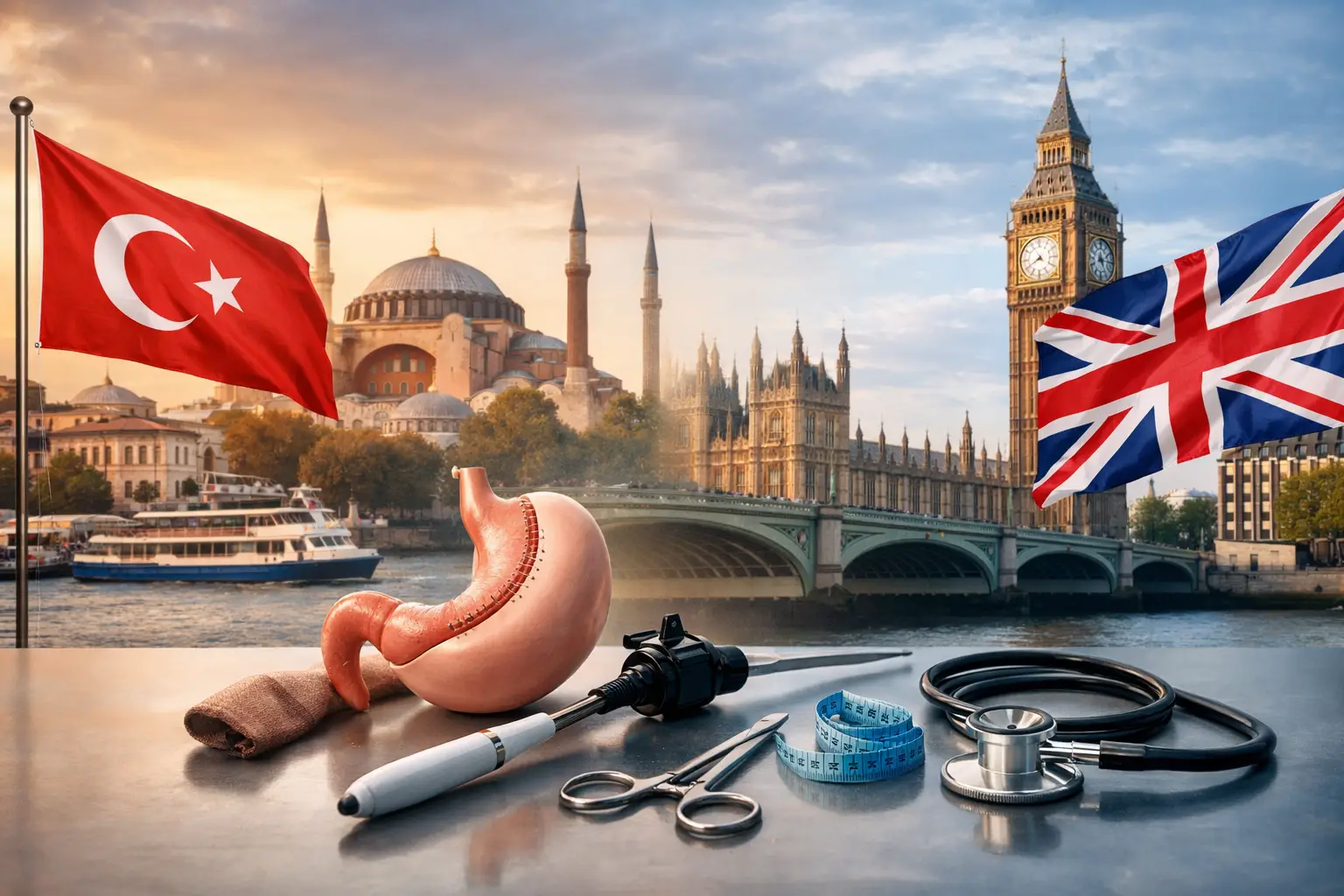

If you have spent months, or years, trying to decide whether weight-loss surgery is the right step, the next question often lands even harder: where should you have it done? For many patients, Turkey vs UK bariatric surgery is not a simple price comparison. It is a decision about safety, timing, support, and whether you feel looked after from the first enquiry to the first weeks back home.
For some people, staying in the UK feels reassuring because it is familiar and close to family. For others, travelling to Turkey makes sense because the process can move faster, the costs are lower, and the care package is more structured than they expected. The right answer depends on your priorities, your health, and how much support you want around the surgery itself.
Turkey vs UK bariatric surgery: what really changes?
The biggest differences tend to come down to waiting time, access, price, and how the patient journey is organised.
In the UK, bariatric surgery may be available through the NHS, but eligibility is strict and waiting lists can be long. Private treatment is an option, but it can be expensive, especially once you add consultations, hospital fees, surgeon fees, anaesthetist fees, and follow-up appointments. The process can feel fragmented if different parts of your care are handled by different teams.
In Turkey, the appeal is usually different. Patients are often able to secure surgery dates much sooner, and the total cost is typically far lower than private care in the UK. Just as important, many medical travel providers build the whole process around the patient. That can include airport transfers, hotel stays, pre-op testing, hospital scheduling, translation support, and aftercare planning. When done well, it feels less like piecing together a medical trip and more like being guided through one.
That does not mean one country is automatically better. It means the experience is different.
Cost is important, but it should not be the only lens
Cost is often what starts the conversation. A private gastric sleeve or gastric bypass in the UK can be significantly more expensive than the same procedure in Turkey. For patients funding treatment themselves, that difference matters.
But the smarter question is not simply, “Where is it cheaper?” It is, “What is included, and who is responsible for me if something feels unclear?”
A low headline price can be misleading in any country. In the UK, you may find that the quoted fee does not include everything. In Turkey, package pricing can be excellent value, but you still need to check what sits behind it. Are pre-op bloods and imaging included? How many nights in hospital? Will you have a translator or patient coordinator? What happens after you fly home?
That is where patients often see the real difference between basic medical tourism and a properly managed service. A carefully coordinated pathway can reduce stress just as much as it reduces cost.
Waiting times and access to surgery
For patients who are living with type 2 diabetes, joint pain, sleep apnoea, low mobility, or worsening quality of life, timing is not a minor detail. Delaying surgery by many months can mean more weight-related complications, more frustration, and more failed attempts to manage symptoms alone.
This is one of the strongest reasons people compare Turkey vs UK bariatric surgery in the first place. In the UK, NHS access can take time and private routes, while faster, are not always financially realistic. In Turkey, surgery can often be arranged much sooner once you have been assessed as suitable.
That speed can be a real advantage, but only if it is matched with proper screening. Good bariatric care should never feel rushed, even when it is efficient. You should still expect a review of your medical history, clear advice on suitability, pre-operative tests, and honest discussion about risks.
Safety depends more on standards than geography
Some patients assume UK care must be safer because it is local. Others assume high procedure volumes abroad automatically mean better outcomes. Neither view is complete.
Safety is not decided by a country label. It depends on the surgeon’s experience, the hospital setting, the pre-op assessment, anaesthetic cover, infection control standards, and the quality of aftercare. It also depends on whether the provider tells you when surgery is not appropriate.
If you are considering Turkey, ask practical questions. Which hospital will the operation take place in? What tests are done before surgery? Who reviews your results? How often will you be seen on the ward? What support is available if you are anxious, travelling alone, or bringing a partner?
Patients are often surprised by how structured care in Turkey can be when they choose an established provider. Coordinated testing, private hospital admission, daily clinical reviews, and translation support can make the experience feel highly organised rather than uncertain.
The patient experience is often very different
This is where the comparison becomes personal.
In the UK, you may prefer to recover close to home and familiar surroundings. That matters, especially if travelling feels daunting or if you have complex health needs that are best managed near your own doctors. There is comfort in local follow-up and not having to board a flight after surgery.
In Turkey, the patient journey is often built around reducing friction. For international patients, that can mean being met at the airport, taken directly to the hotel or hospital, guided through tests, supported at appointments, and checked on regularly by a coordinator. For many people, especially those who are nervous or embarrassed about asking questions, this level of hand-holding is not a luxury. It is a relief.
That is one reason so many UK and Irish patients choose Antalya. They do not just want an operation. They want a process that feels clear, responsive, and manageable.
Aftercare matters more than most patients realise
A successful bariatric operation is not the end of treatment. It is the start of a long adjustment.
You will need guidance on hydration, protein intake, supplements, activity, portion size, and the physical changes that happen in the weeks ahead. You may also need reassurance about normal symptoms, wound healing, fatigue, and the emotional side of rapid weight loss.
This is one area where patients should be very careful when comparing options. Some UK providers offer strong local follow-up, but not all private packages are equal. Some overseas providers offer excellent aftercare, while others focus heavily on getting the surgery booked and much less on what happens after discharge.
The better question is not whether aftercare is in the UK or Turkey. It is whether it is structured, responsive, and realistic for your life once you return home.
At Bridge Health Travel, for example, the focus is on a coordinator-led pathway that continues after you fly back, because questions rarely stop at the airport. That kind of continuity can make a meaningful difference during the early recovery period, when patients often need both practical advice and reassurance.
Is travelling after surgery a problem?
It can be a concern, and it is sensible to raise it.
Most bariatric travel pathways are designed around a short hospital stay followed by a period of recovery before flying home. Patients are monitored, encouraged to mobilise, and given instructions to reduce risks during travel. For otherwise suitable patients, this can be managed safely.
Still, it is not ideal for everyone. If you have significant mobility issues, highly complex medical conditions, or severe anxiety around flying, local surgery may feel more appropriate. On the other hand, many patients who were initially worried about travelling find that a well-planned itinerary, private transfers, and close coordinator contact make the trip far easier than expected.
How to decide which option is right for you
The best decision usually comes from being honest about what you need most.
If your priority is staying close to home, having face-to-face local follow-up, and avoiding travel, the UK may suit you better, even if private treatment costs more. If your priority is quicker access, lower cost, and a concierge-style process with tightly managed logistics, Turkey may be the stronger fit.
What matters is choosing based on standards, support, and suitability rather than assumptions. Ask detailed questions. Read the information carefully. Pay attention to how a provider communicates with you before you commit. If responses are vague before surgery, they are unlikely to become clearer afterwards.
Good bariatric care should make you feel informed, not pressured. Reassured, not sold to. The right team will explain the trade-offs honestly and help you understand not just the operation, but the full journey around it.
If you are weighing up Turkey and the UK, do not focus only on where the surgery happens. Focus on who will guide you through it, who will answer when you are worried, and whether the support around the operation is strong enough to carry you into the next stage of your life.