
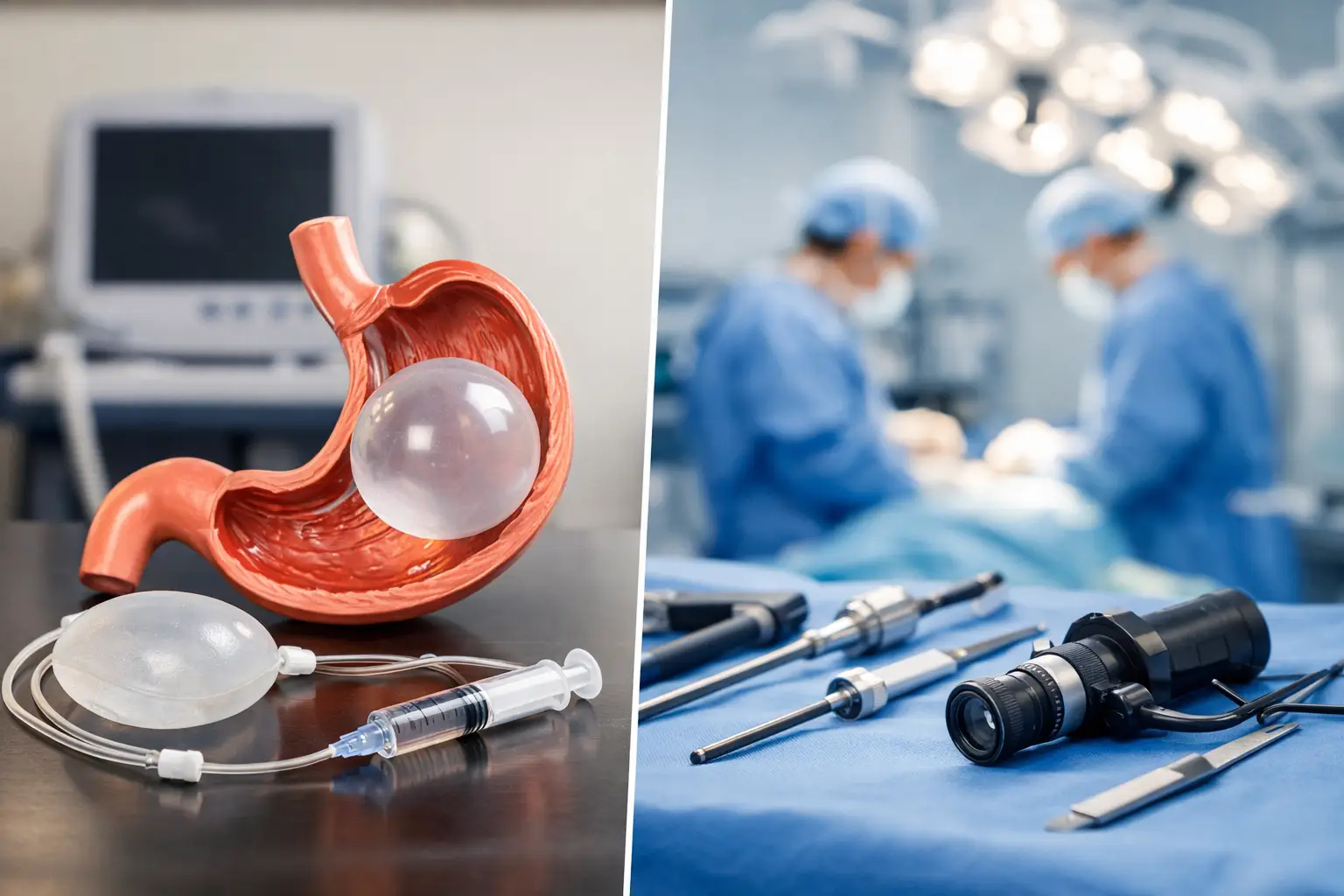

A gastric balloon can feel like the less daunting first step: no incisions, no permanent change to your stomach, and a shorter initial recovery. Bariatric surgery can offer greater, more durable weight loss, but it asks more of you before and after treatment. When considering gastric balloon versus surgery, the right choice is rarely about finding the “easiest” option. It is about matching a treatment to your health, weight-loss needs, eating patterns and readiness for long-term follow-up.
For many patients, this decision comes after years of dieting, regaining weight and feeling that food occupies too much mental space. A clear clinical assessment can replace that uncertainty with a realistic plan.
Gastric balloon versus surgery: the key difference
A gastric balloon is a temporary device placed in the stomach to help you feel full with smaller portions. Most balloons are inserted endoscopically, usually under sedation, and are removed after a defined period, commonly six or 12 months depending on the device. Some swallowable balloon options are also available for suitable patients.
Weight-loss surgery, also called bariatric or metabolic surgery, changes the stomach and sometimes the digestive route. A gastric sleeve reduces the size of the stomach. Gastric bypass and mini gastric bypass create a smaller stomach pouch and alter how food passes through part of the small intestine. These procedures are designed as long-term treatments rather than temporary aids.
That distinction matters. A balloon supports behaviour change during a fixed window. Surgery creates a stronger and more lasting physical tool, although it still depends on nutrition, activity, supplements and ongoing medical monitoring.
What results can you realistically expect?
Results vary with starting weight, medical conditions, food choices, activity, medication and engagement with follow-up. It is more useful to discuss expected ranges with a bariatric team than to focus on one promised number.
With a gastric balloon, many patients lose around 10% to 15% of their total body weight while the balloon is in place. Some lose more and some less. The crucial question is what happens after removal. Without a structured plan for portions, protein intake, emotional eating and exercise, weight regain is possible.
Surgical procedures generally produce more substantial average weight loss. A gastric sleeve may lead to around 25% to 35% total body weight loss, while bypass procedures can achieve similar or, in some cases, greater results. Surgery may also improve obesity-related conditions such as type 2 diabetes, high blood pressure, sleep apnoea and joint pain. The degree of improvement depends on the individual and should never be guaranteed.
If you need to lose a relatively modest amount of weight, or want a non-surgical bridge into healthier routines, a balloon may be appropriate. If you have a higher BMI, significant weight-related health concerns or a long history of regaining weight after non-surgical treatment, surgery may offer the more effective long-term option.
Recovery: short-term comfort versus long-term adjustment
A balloon usually involves a quicker return to everyday activity than surgery. However, the first few days can be uncomfortable. Nausea, cramping, reflux and vomiting are common while your stomach adjusts. Medication, hydration and close contact with your clinical team are particularly important at this stage.
Following gastric sleeve or bypass surgery, patients need more recovery time and a carefully staged diet. You will begin with fluids, then progress through puréed and soft foods before returning to solid meals according to your surgeon’s guidance. Tiredness is normal early on, and you will need time away from work depending on your role and recovery.
Surgery also requires a more permanent adjustment to how you eat. Meals become smaller, protein takes priority and eating slowly matters. For many people, these changes become manageable routines rather than restrictions, especially when they have clear guidance and support. But they should be understood before booking treatment, not discovered afterwards.
Risks and commitments to consider
Neither option is risk-free, and a reputable provider should discuss complications openly rather than presenting any procedure as a shortcut.
A gastric balloon can cause persistent nausea or reflux. Less common risks include balloon deflation, migration, ulceration or the need for early removal. It is temporary and reversible, but that reversibility also means its appetite-control effect ends when the balloon is removed.
Bariatric surgery carries the usual risks associated with anaesthesia and an operation, including bleeding, infection, blood clots and leaks. The likelihood varies by procedure, individual health and surgical team. Longer term, patients may experience reflux after a sleeve, or nutritional deficiencies after bypass procedures. Lifelong vitamin and mineral supplementation, blood tests and follow-up are essential after surgery.
The commitment is not only clinical. Both treatments work best when you are prepared to change eating habits and stay connected with aftercare. If binge eating, frequent alcohol use, uncontrolled anxiety or difficult food relationships are part of your experience, these should be addressed compassionately during assessment. They are not reasons for judgement. They are factors that help determine the safest and most useful treatment plan.
Who may be suited to a gastric balloon?
A balloon may be worth discussing if you want a non-surgical intervention, are not ready for permanent surgery or need support to begin losing weight before another procedure. It can also suit patients whose BMI or medical profile does not meet local criteria for bariatric surgery.
It is often most successful for people who see it as a period of active learning. The months with a balloon should be used to build repeatable habits: regular meals, smaller portions, enough protein, better hydration and a realistic activity routine. The device is there to support these changes, not replace them.
A balloon may be less suitable if you have certain stomach conditions, a large hiatus hernia, previous upper gastrointestinal surgery or severe reflux. Your doctor will review your history and tests before advising.
Who may be better suited to surgery?
Surgery is commonly considered for patients with obesity that has had a serious impact on health or quality of life, particularly where previous supervised attempts at weight loss have not delivered lasting results. It may also be considered at lower BMI levels for some people with type 2 diabetes or other metabolic concerns, subject to clinical assessment.
The choice between sleeve and bypass is just as individual as the choice between balloon and surgery. A sleeve can be an excellent option for many patients, but significant reflux may make bypass more appropriate. Bypass can offer powerful metabolic benefits, yet it requires particularly careful attention to supplements and nutrition.
The best procedure is not necessarily the one a friend had or the one with the fastest-looking results online. It is the one your surgeon recommends after reviewing your BMI, medical history, reflux symptoms, medication, eating habits, blood results and goals.
Planning treatment abroad without added uncertainty
For patients travelling from the UK or Ireland, the procedure is only one part of the decision. You also need to know who will arrange pre-operative checks, explain your diet stages, answer questions after discharge and support you once you are home.
At Bridge Health Travel, patients are guided through hospital scheduling, pre-operative testing, transfers, accommodation arrangements and communication with the clinical team in Antalya. For surgery patients especially, this coordinated approach can reduce the strain of managing appointments and travel while you are understandably focused on your health.
Before travelling, ask practical questions about the surgeon’s assessment, hospital stay, what is included in the package, complication protocols, access to a coordinator and the aftercare plan. A good answer should be specific, calm and transparent.
Make the decision around your future, not your fear
A gastric balloon can be a valuable, lower-commitment tool. Bariatric surgery can be a life-changing treatment for people who need greater and more durable weight loss. Neither choice reflects willpower, and neither removes the need for support.
The most helpful next step is a thorough consultation where you can speak honestly about your health, your previous attempts to lose weight and what life needs to look like a year from now. The right plan should leave you feeling informed, cared for and ready to take the next step with confidence.